
Category: European Parliament
Cyber Resilience Act: Protecting digital security works differently
Today, the EU Commission presented the “Cyber Resilience Act”, draft legislation which would oblige manufacturers of products “with digital elements” to guarantee cyber security throughout the …
New Rules on political advertising to stop voter manipulation!
The new rules on political advertising need to be designed to stop the manipulation of elections and referendums through personalised advertising messages. Today, Dr. Patrick Breyer, Pirate Party MEP, …
IP data retention is no option: IPv6 addresses can be unique and persistent tracking identifiers – a new study finds
A study on IP addresses [1] by scientists from TU Delft in the Netherlands and the Max-Planck-Institut at Saarland University in Germany proves IP data retention threatens citizens’ privacy: IP …
EU Rule of Law Report: Data Retention is a blind spot
Today, the European Union Commission will publish the annual Rule of Law Report. According to MEP and civil rights activist Patrick Breyer (Pirate Party, Greens/EFA Group …
EU lawmakers criticise Commission’s Plans to eliminate Net Neutrality
Digital Services Act no game-changer: Industry and government interests prevailed
Today, one day ahead of the final approval, the European Parliament debated the EU Digital Services Act (DSA) establishing new rules for online platforms. Patrick Breyer MEP, who participated in …
Three years into the digital fight for freedom in Brussels – Pirates matter!
Three years ago, I entered the European Parliament thanks to 240,000 votes for the German Pirate Party and no blocking threshold (which the German Federal Constitutional Court had declared unconstitutional). …
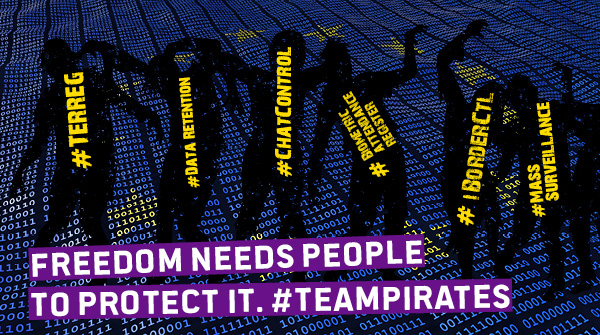
Leak on chat control: EU Commission anticipates millions of false positives
German news website netzpolitik.org leaked a record of internal discussions regarding the EU‘s proposed online child abuse law (dubbed “chat control”) which …
Digital cash: EU to end anonymous payments in cryptocurrencies
Yesterday, the European Parliament and the Council made a deal on the rules for crypto assets. Anonymous payments will effectively be prohibited, interfering with the fundamental characteristics of decentralised …